Built from your bill, not a typical household
Small, medium or large? Your home is none of them.
A “typical household” estimate can be hundreds of dollars out. Utilo reads your bill instead: how much power you use and when, the rates you pay now, and the plan you're on. Then it prices the 970 plans we track from 27 retailers for your home, and tells you plainly whether switching is worth it.
Free, no sign-up, about a minute. Gas too: check a gas bill.
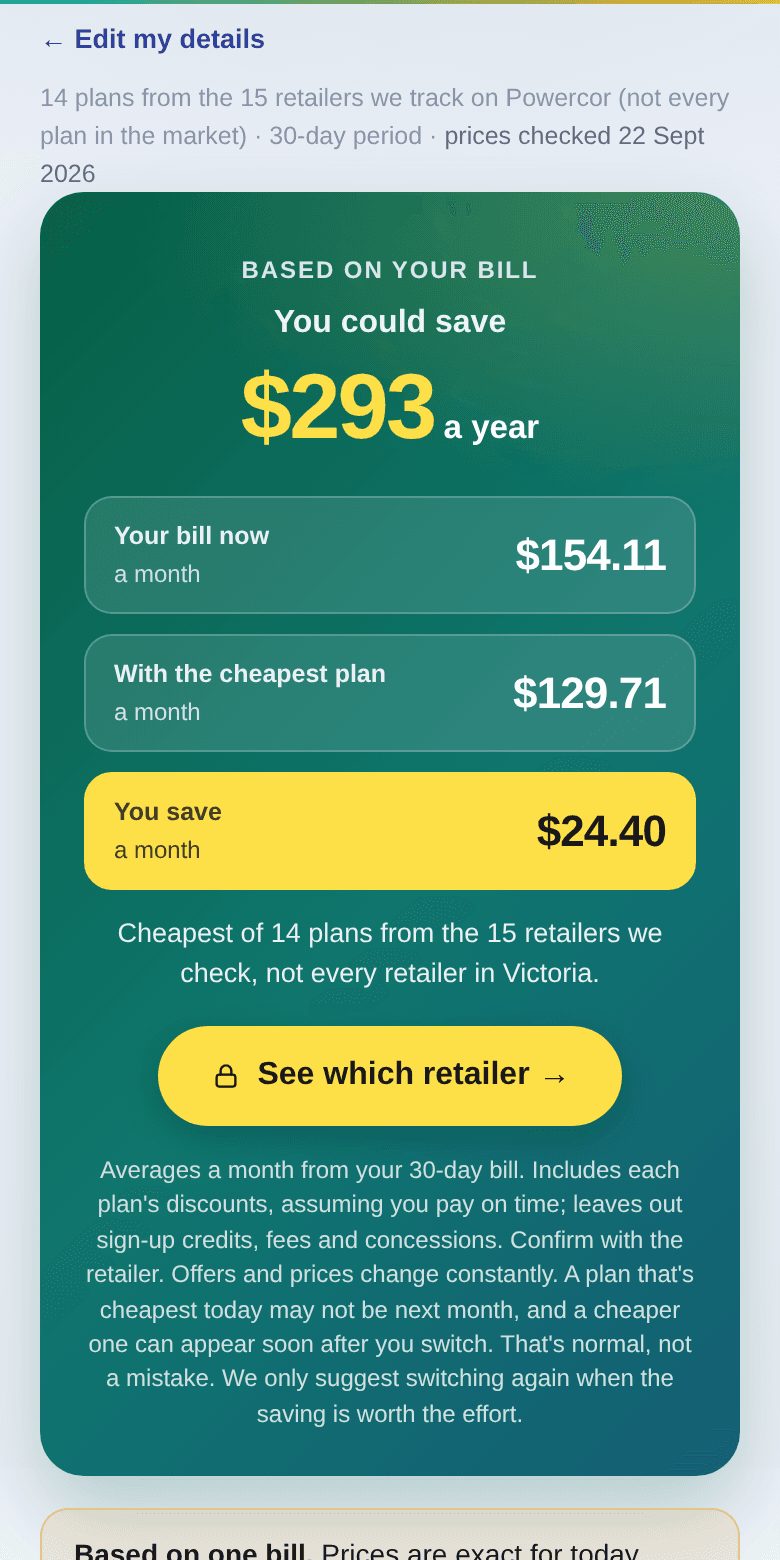
A result from the check, using an example bill.
Three things only your bill knows
A typical-household comparison has to guess all three. They're what decide your cheapest plan and what it really saves you.
How you use power
Your usage at peak, off-peak and shoulder times, any controlled load and your solar exports, for the days on your bill.
What you pay now
Your own rates and your bill total, so the saving we show is against what you actually pay, not against a headline price.
Which plan you're on
Retailers reuse plan names. Around 360,000 Victorians are on an older, dearer version of a plan with a cheaper twin of the same name. Your bill shows which one you have, and we'll tell you.
Same prices, three homes, three different answers
We priced every plan we track for three homes on the Powercor network, against the default offer, using the latest prices we have. A typical-household figure would tell all three they save $396 a year.
One person in a flat
Out at work, gas heating, no air-con
- Uses
- 2,600 kWh a year
- Cheapest plan
- $925 a year
- Saving vs the default offer
- $312 a year
A different cheapest plan: the typical home's pick would cost it $12 a year more.
- What a typical estimate assumes
The “typical household”
4,000 kWh a year, the regulator’s “typical” figure
- Uses
- 4,000 kWh a year
- Cheapest plan
- $1,236 a year
- Saving vs the default offer
- $396 a year
A family of five
Reverse-cycle heating, electric hot water on controlled load
- Uses
- 8,550 kWh a year
- Cheapest plan
- $2,067 a year
- Saving vs the default offer
- $663 a year
A different cheapest plan: the typical home's pick doesn't even price its controlled load.
The saving runs from $312 to $663 a year. Estimates from our household model, prices checked 18 October 2026, discounts for paying on time included. Your bill will be different again, which is why we read it. How we price plans
How it works
- 1
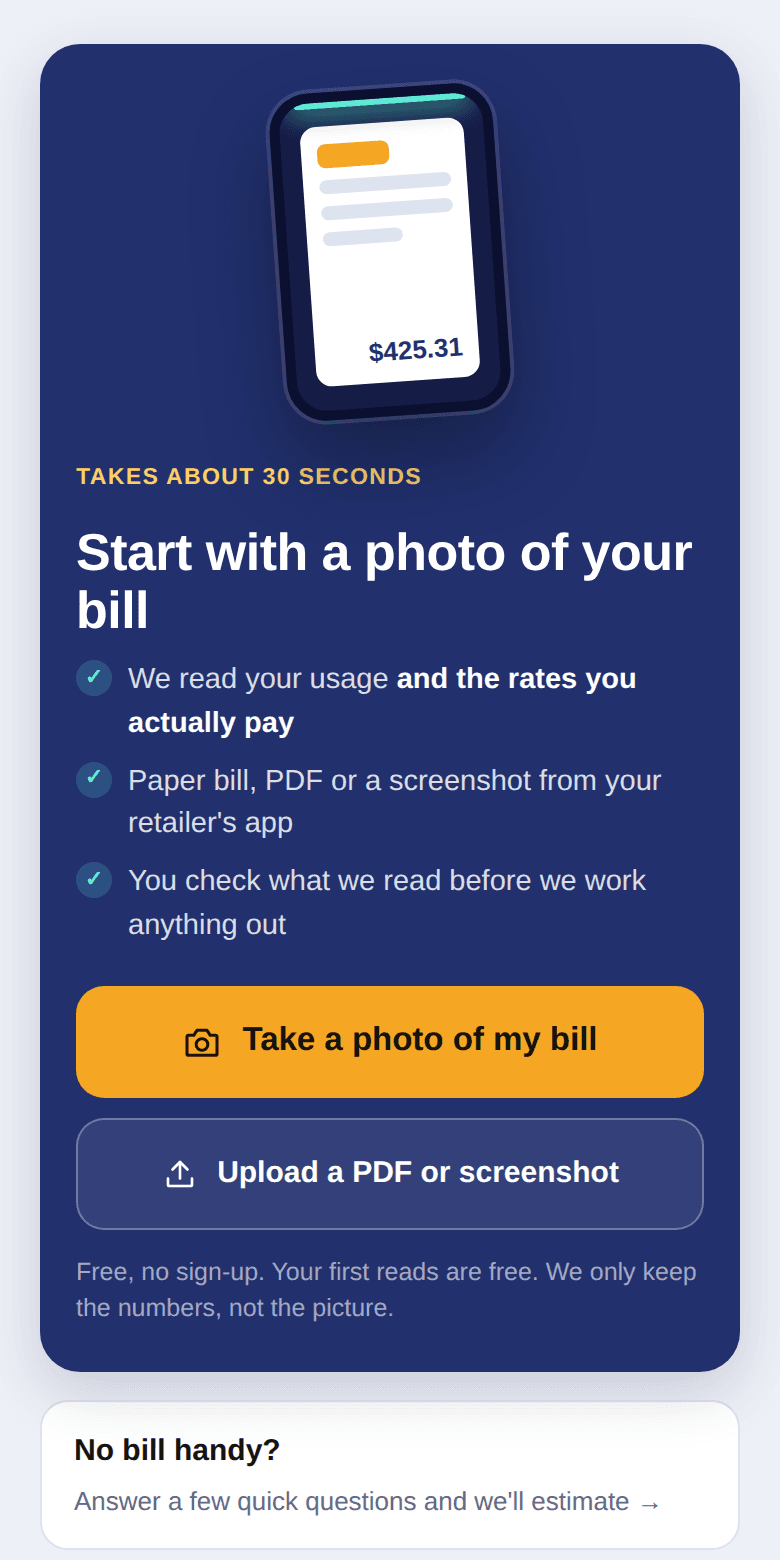
Take a photo of your bill
Paper, PDF or a screenshot from your retailer's app. No bill to hand? Answer a few questions about your home instead.
- 2
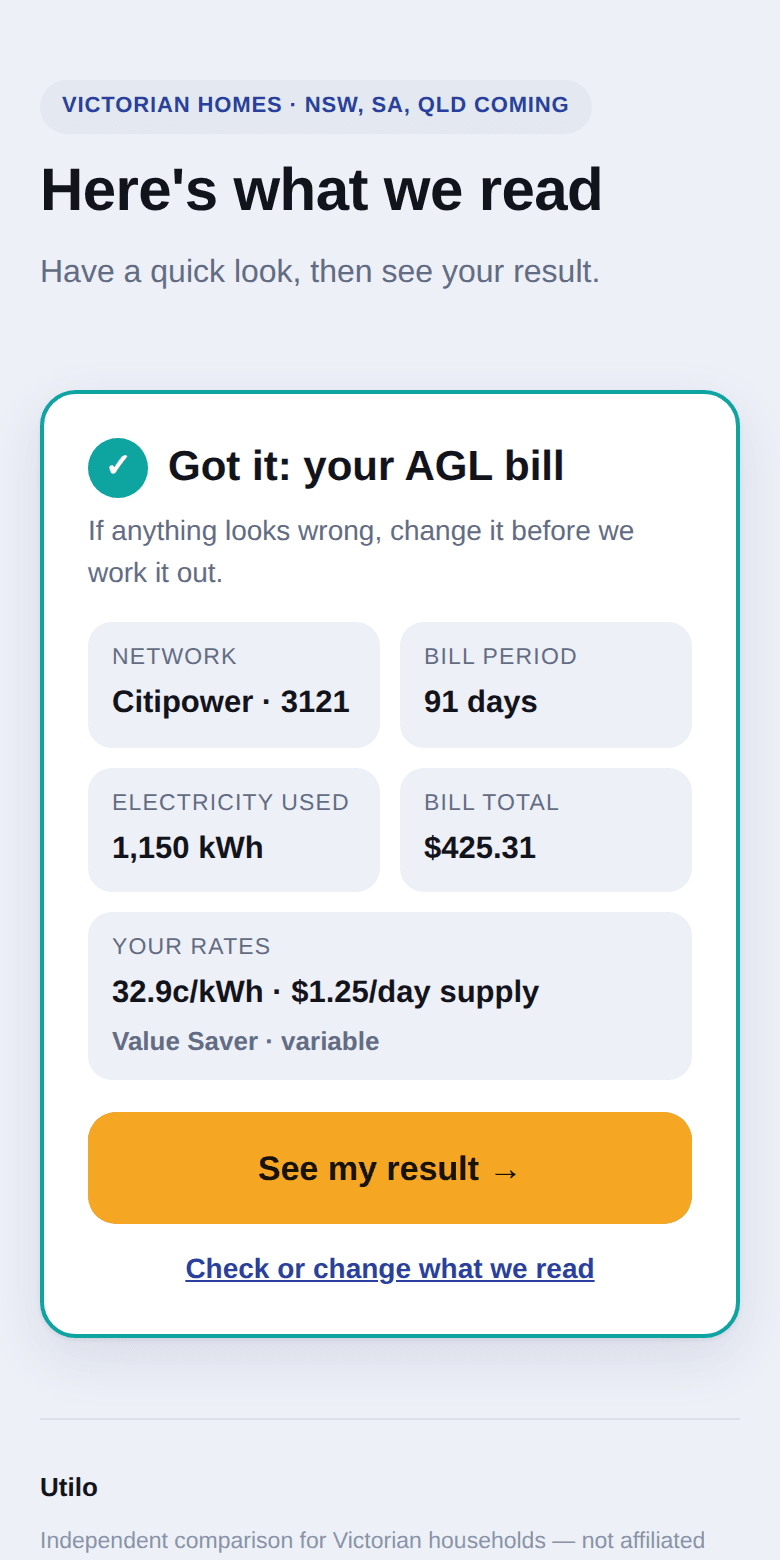
Check what we read
Your network, usage, bill total and the rates you pay. Change anything that looks wrong before we work it out.
- 3
See whether to switch
The cheapest plan for how you use power, what it saves in a year, and a link to the retailer. Switching is done with them, usually in about ten minutes.
Prices don't stay put
Many discounts only last the first year, retailers change prices around 1 July, and new plans appear all the time. A plan that's cheapest today often isn't a year later. Members are re-checked every morning and hear from us only when it matters:
- A month before your discount or fixed price ends
- After 1 July, when retailers reprice
- Whenever a plan beats yours by $50 a year or more (or the amount you choose)
Used Victorian Energy Compare? Good: it's the Government's site and well worth a look. It finds the best deal on the day; we start from your bill and keep checking. How the two fit together.
$39 a year to keep it watched
The check is free. Membership covers electricity and gas: re-checked every morning, an email only when switching is worth it, and a short summary each month. Or $7 a month. Cancel any time.